
Implementation & Integration
How does this become a reliable part of our operation?
Build a selected initiative into the way your business works.
Discuss your project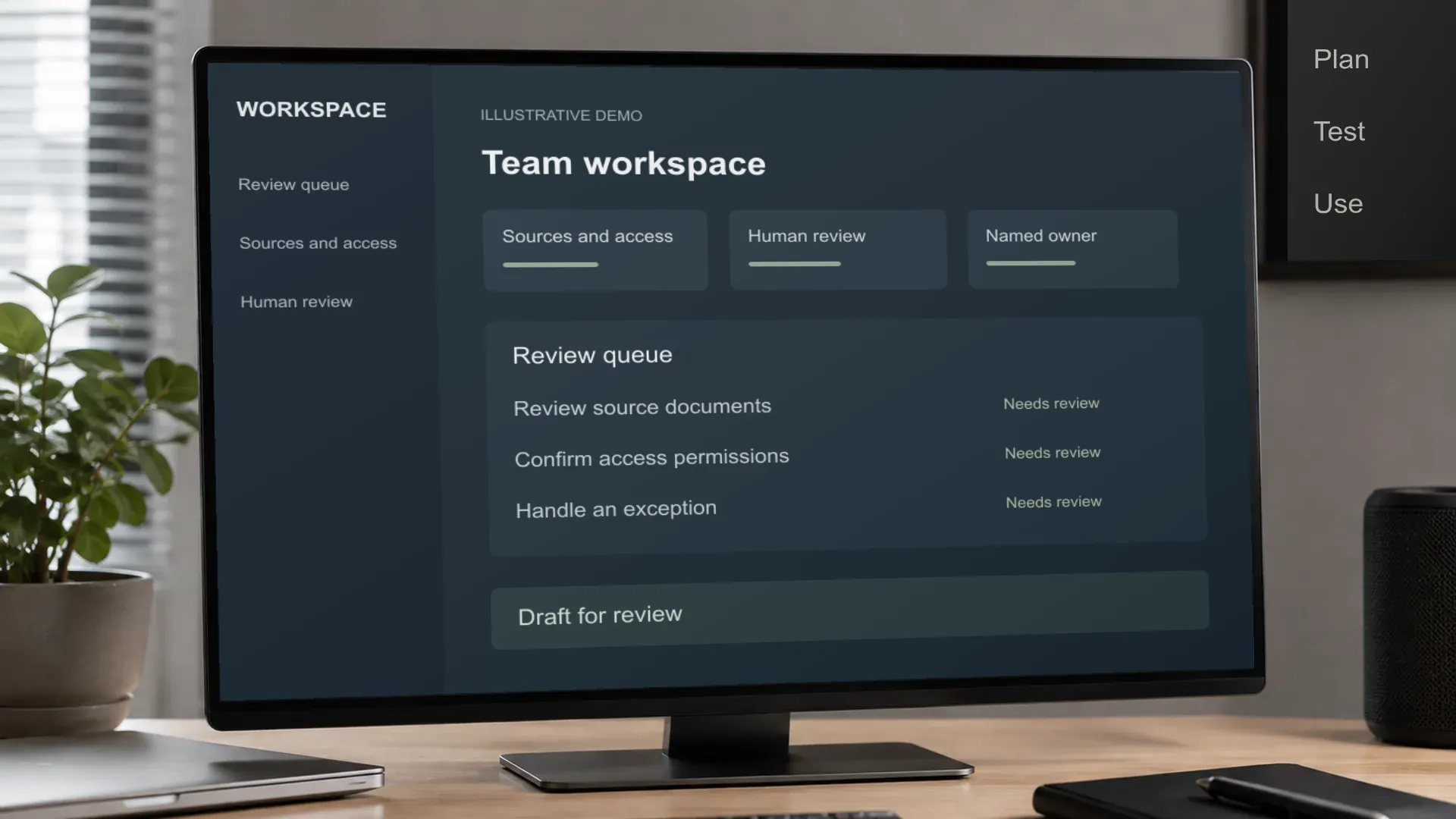
What it is
I design and build the chosen workflow, application or integration, working directly with the people who will use and maintain it. A focused pilot tests the approach before you commit to a wider rollout.
- You have a selected problem and an owner who can approve scope and access.
- The people using the result can test representative work and exceptions before release.
Included work
- A scoped design covering system connections, data access and operating costs
- A working pilot tested against agreed success criteria and exceptions
- An implementation refined through user feedback and operational checks
- User guidance, technical documentation and agreed ownership for handover
A defined scope
Controlled AI pilot
Test one selected workflow with a defined user group and representative inputs. Make the evidence inspectable before deciding whether to expand.
- A pilot charter with scope, approved access, acceptance criteria and a business owner
- A working candidate with human review, exception handling and tests against representative work
- A findings and handover record covering observed behaviour, operating requirements and the expand, revise or stop decision
Live actions, data access and release are authorised separately. Pilot evidence applies to the tested scope and does not establish results across the whole organisation.
Discuss this scopeIllustrative possibilities
What this can look like at work
Examples of possible applications, not customer cases or measured results. We check sources, permissions and human review for your situation.
Knowledge base for the team
IT and knowledge teams giving staff a searchable, permission-aware source of answers.
- The application answers from approved documents and shows source passages and versions for checking.
- Access follows the user's role; missing or conflicting information goes to a named knowledge owner.
- Staff test representative questions in the agreed languages before acceptance and source handover.
Quote assistant on your price list
Sales operations preparing quotes from controlled product and price data.
- An enquiry and approved price list produce a draft with the source of prices and assumptions visible.
- The application flags missing details and non-standard terms for the commercial owner instead of inventing them.
- The owner checks and sends; representative tests include outdated prices and enquiries in the agreed languages.
Schedule proposal from enquiries
Operations planners coordinating work across people, teams or locations.
- Approved enquiries, availability and planning rules become a proposed schedule, with conflicts visible.
- Planners adjust and approve the proposal. The application does not assume permission to change calendars.
- Acceptance checks include missing capacity, changed requests and the handover of planning rules.
How we work
Stage 01
Agree the pilot
The business owner and IT contact approve the chosen workflow, source access, human review and acceptance criteria. We record dependencies and who may authorise live actions.
Stage 02
Build an inspectable version
I connect the agreed systems and show users working increments. Exceptions, failed connections and recovery are part of the design.
Stage 03
Test and decide
Users test representative inputs, permissions and required languages. I document behaviour, failures and operating requirements for the expand, revise or stop decision.
Stage 04
Introduce and hand over
After approval, I help the team put the agreed scope into use. Instructions, technical documentation, account access and maintenance responsibility are handed over together.
Delivery and ownership
We review the agreed work against the acceptance criteria with its responsible owner. I record what is ready, what remains open and who will maintain it. Approval to use or publish the result is a separate decision.
- Documentation, accounts, source material and ownership are agreed before work begins.
- Your IT team can review access, integrations, security requirements and operating arrangements.
- Guidance covers the intended users and languages, review responsibilities and exception handling.
What we agree first
What I need from you
A business owner, approved system access, representative work examples and people available to test the result in their daily work.
Pilot findings determine the rollout scope. I review system constraints with you and agree any specialist involvement before building.
I work directly with you from the Netherlands. Remote collaboration is available across Europe, Asia and the Americas. Travel, working languages and time zones are agreed per engagement.
Before we begin
How do we decide whether to expand a pilot?
We compare the evidence with agreed acceptance criteria, including failures, human review and operating costs. The next decision can be to expand, change the approach or stop.
Can you connect our existing systems?
I check available APIs, permissions and supplier restrictions before confirming the design. Unsupported connections or specialist requirements may change the scope.